If you were a little kid in the early 2000s like I was, there was a chance you were really into Digimon. I always found the anime to be more compelling than Pokemon because it offered more nuanced characters and storytelling with themes that went far beyond catching ‘em all. How its cast of young characters explored the digital world was incredibly compelling, and still is to this day.
And if you were into Digimon, you probably also saw the movie that arrived in 2000 to harsh critical reviews and commercial success outside of Japan. Produced by Fox Kids and Saban Entertainment, the English-language release was actually a collection of short films that were retrofitted into a single narrative thanks to excessive rewrites, editing, and an absolutely banger soundtrack featuring bands such as Smash Mouth, Less Than Jake, and The Mighty, Mighty Bosstones. I don’t know who decided that this anime needed to have a banging ska soundtrack, but I need to give them a big ol’ kiss on the mouth.
The Japanese films included in ‘The Digimon Movie’ were Digimon Adventure, Digimon: Our War Game! and Digimon Adventure 02: Hurricane Touchdown! In their original forms, these gave us entirely unique stories yet eventually unfolded into the eventual television series, but here they are stitched together to tell a continuous narrative in which characters new and old embark on an epic adventure spanning several years.
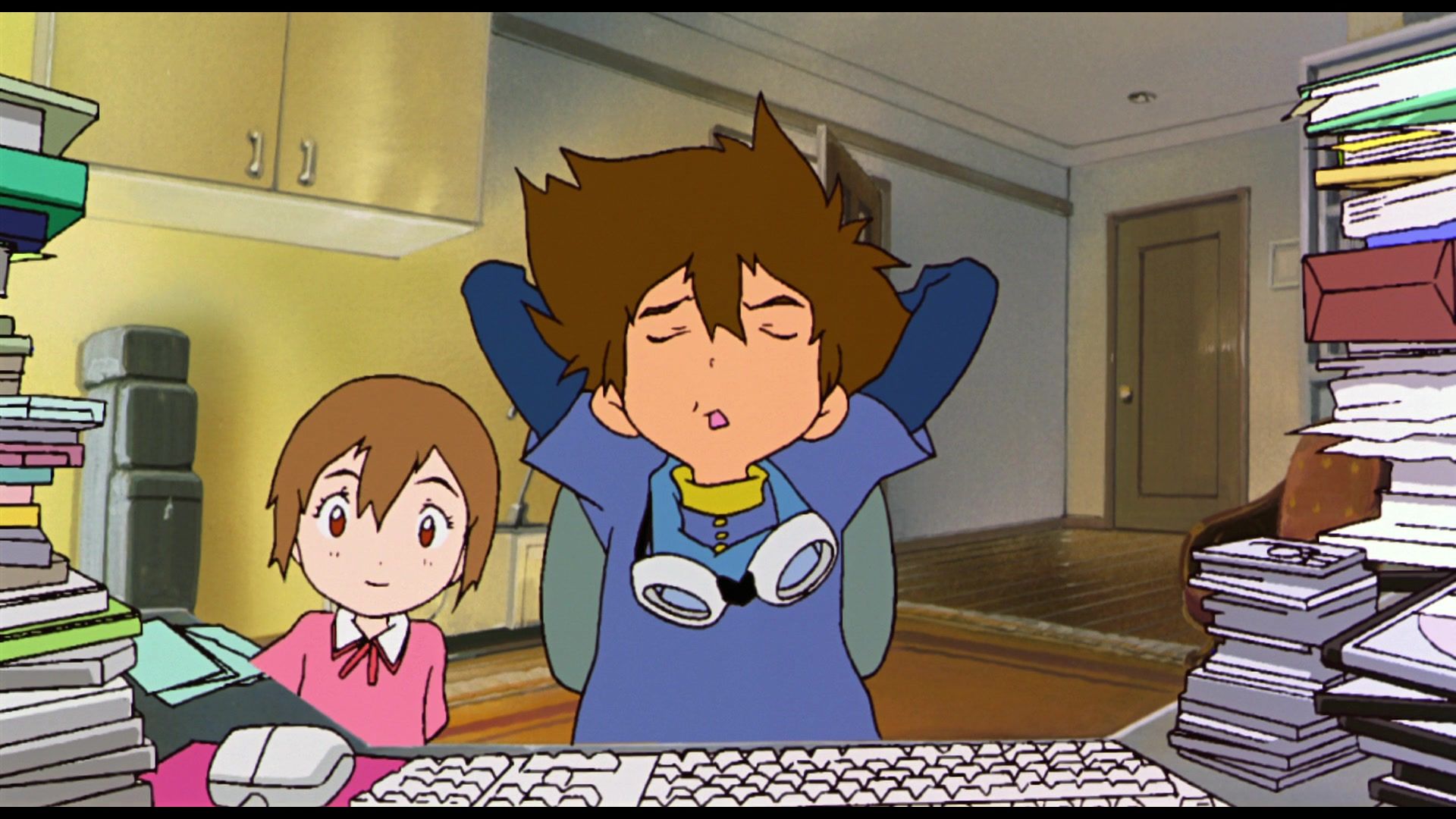
It mostly makes sense, even if it swaps out obviously Japanese locations to label them as New York and Colorado, but if you were a young kid watching this at the start of the new millennium, you didn’t care. It also matched the tone we’d come to expect from the TV series with faces we already knew and loved. It was so fun to see Tai and Kari take on new challenges with so many luscious visual flourishes.
Shout out to Kari Kamiya for being the first character to make me realise I was totally a closeted trans kid.
It Doesn’t Matter How You Enjoy The Digimon Movie
Even if it bastardises the narratives of several original films and alters their artistic intention, I will always have a soft spot in my heart for The Digimon Movie. It was a vital part of my early childhood and defined many of the tastes I would hold onto later on in life. It wasn't until years later that I discovered how these films unfolded in their original form, and I’ve developed an equal amount of love for them as a consequence.
Unfortunately, the internet is a place for fighting, and this week I’ve seen countless takes about how the Japanese versions of Adventure and War Game! will always be superior, and you’re a terrible person for thinking otherwise.
Tribalism has begun to unfold between people who are understandably faithful towards the Japanese originals and the creative visions they possess, and others who grew up with the Frankenstein English release and hold its many unique qualities close to their hearts.
There can be absolutely no denying that Fox Kids took all three films and tried to make them very appealing to a young American audience, but wasn’t that always the plan? You could drag Pokemon through the coals for the very same sins that Digimon is committing, and I would argue that The Digimon Movie was memorable because it wanted to change things up even if you think such choices were made in bad taste. Moments like this will always be hype.
But to understand why people are so hostile towards the Western version, you first need to look at what they deliberately took away from the Japanese originals. Digimon Adventure is a 20-minute short film directed by Mamoru Hosoda, who would later go on to direct classics like The Girl Who Leapt Through Time, Wolf Children, and Summer Wars.
It follows Tai and Kari Kamiya as a digiegg is born from their computer and hatches into an adorable creature they decide to raise as their own. But it soon evolves from a black blob to a pink blob to a very giant dinosaur that, in suburban Tokyo, can prove incredibly dangerous. Little context is given to the narrative beyond this being the first time our protagonists come into contact with Digimon, and there is an unassuming beauty to that approach.
I unfortunately cannot condone the diabolical Angela Anaconda short that precedes The Digimon Movie. Nobody deserves to remember that awful thing ever existed.
It’s a striking prologue to the animated series that introduced us to the circumstances of this world that proved it wasn’t just a lazy Pokemon clone. It was something more. I also admire how the entire short is scored to Maurice Ravel’s Bolero, an orchestral piece used to thrust the action forward in the later moments and inform both the physical decisions and emotions of our core characters.
Serious thought went into how this masterful short could pull us into this world and refuse to let go, whether it be subtle details in the animation or the final battle taking place as characters we’d come to know in the animated series watch on closely from their apartment buildings. Every single part of this film is considered and easily explains how Mamoru Hosoda would go on to be an acclaimed director on the level of Makoto Shinkai or Hayao Miyazaki. And it all started with digital monsters.
Please Stop Telling People How To Enjoy Digimon
By comparison, the English version has several contemporary songs dropped during pivotal narrative moments, the dialogue is filled with playful jokes, and several scenes are edited so the Western storytelling is better represented. I understand how you can view this as tearing the originals apart, but you can also just respect that there are two separate versions of a brilliant thing made for two individual audiences. There is worth in both approaches, and most of the people who grew up with the English release grew up to appreciate the Japanese originals anyway. Like me!
I’m being serious, there are so many great jokes in the English version. Tai’s mother saying she can’t make a three-bean salad for his friends because she only has two beans is such an underrated zinger dubbed with immaculate comedic timing. It’s full of gags like this which could only be written from a different perspective.
In recent years, English dubbing of anime and video games is no longer the boogeyman it used to be, largely because there are people working on them who want to depict stories or characters with the utmost accuracy. Concessions must be made sometimes in the name of localisation, but rarely do we ever see something along the lines of The Digimon Movie.
It’s taking several different source materials and shaping them into something entirely new as it serves a Western audience. You can view that as offensive today, but in the context of 2000, it simply represented where anime and manga were on the global stage and how a younger fanbase was catered to. Digimon was aired on Fox Kids alongside Power Rangers. It wasn’t meant to be that deep.
But the prevailing lesson here is not gatekeeping media or ways in which it is enjoyed just because you want to feel superior. I totally get that Digimon is better experienced with the original Japanese audio and storytelling, but punishing people for surrendering to a movie that they’re justifiably nostalgic for just feels like spoiling fun for no good reason. Whether you’re rocking out to Less Than Jake or appreciating the solemn nature of Bolero, there are few wrong ways to fall in love with Digimon.
Digimon
Expand Collapse